
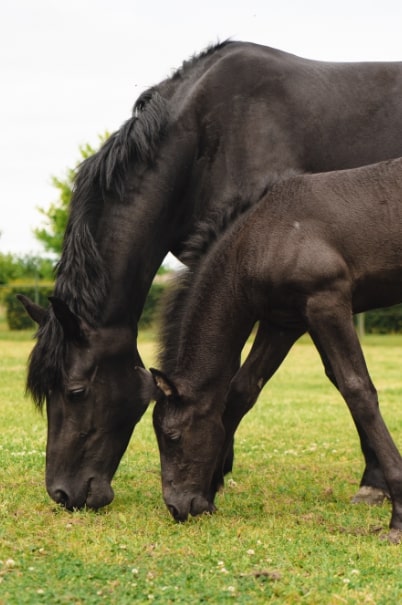
Horses are continuous foragers by nature, so in normal circumstances they will eat small amounts over the course of the day. This helps to keep their digestive systems healthy by providing a steady intake of fibre. It is also a great way to relieve boredom, reducing the chance of behavioural problems. But, you need to consider the impact on their diet, especially if they are grazing. Let’s have a closer look and explore some different options for horse feed.
Intake
It’s great to let horses graze freely, however it does make it difficult to calculate the total intake and calories they are consuming during turnout. It can be as much as 5% of their bodyweight per day if they are on pasture around the clock. Even just a few hours in a field can mean they are eating a large volume of grass.
The main issue here is being unable to accurately calculate grass intake can lead to dietary problems. For example, horses may consume far more calories than they need and gain weight. In the worst cases it can cause Equine Metabolic Syndrome (EMS). This is quite similar to diabetes in humans, resulting in insulin resistance. It can lead to laminitis and other conditions, potentially even causing death.
What to do?
If you have horses that are prone to weight gain and laminitis, or breeds with a higher chance of EMS, you need to be very careful with grazing. There are a number of things you can do though, including changes to horse feed.
Firstly, you can try to limit grass intake. There are different ways to achieve this. Muzzles can be an option, but keep in mind that they can cause irritation and some horses are clever enough to learn to remove them. A really good option is to opt for strip or track grazing rather than leaving horses free to graze an entire field. It limits how much grass they have access to and ensures they have to keep moving, increasing exercise.
Secondly, you can switch to hay or haylage. There are two massive benefits here; you can check the sugar and starch content and you can more effectively calculate how much horses consume. You even have the option to soak hay to reduce the amount of sugar it contains. This is a good tactic for overweight horses.
A third option is to use straw as horse feed, particularly to replace part of hay or haylage. It is low calorie and high in fibre. However, you need to be careful and must consider the texture. Horses with dental issues often can’t eat it. Plus, keep in mind that straw has lower nutritional value; you will likely need a balancer to ensure horses continue to get the vitamins and minerals they need.
Treats
It’s also important to think about what you are giving horses for treats. Many fruits and vegetables are safe, such as apples and carrots. You can even bake different things or buy pre-made ones, including cookies. You must think about the calories here, especially if horses are spending a lot of time grazing. Moderation is crucial.
Ask us about horse feed
If you need help planning a diet for horses, we can help. We stock different types of feed and happily provide details like nutritional info. Great customer service is something you can always count on from us. So, get in touch today.