
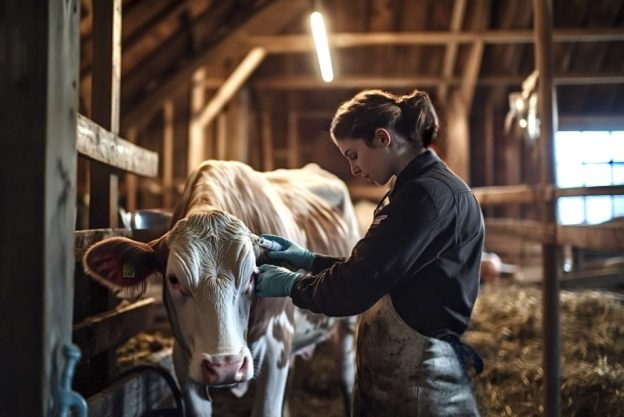
Happy, healthy dairy cattle always perform better. There are some key things to look for, such as consistent production and good condition scores. Their coats should be in a good condition, and faeces should be consistent for the scenario. However, you may notice problems. These could be signs of ill-thrift and may need to be addressed. Let’s have a closer look here, then you can rely on us if you need resources like wormer.
What is it?
Ill-thrift is the term used to describe dairy cattle that don’t grow, produce, or maintain condition when they have consistent feed. In some cases they can decline and lose weight and conditioning. It’s a serious welfare and production issue that can even lead to losses if you don’t tackle it.
As we said above, there are clear signs when dairy cattle are happy and healthy. At the same time, there are obvious symptoms of ill-thrift. Progressive weight loss, a dull coat, scouring, and lower milk production are all things to look for. You may also see animals looking weak and lethargic, perhaps even not eating.
What to do?
The big challenge with ill-thrift is several different factors could be to blame. As a result, tackling it generally becomes a case of narrowing it down and identifying the issues. You can then take appropriate action, including wormer, changing feed, or improving management.
What you need to begin with is a walk among the herd to see which cattle are affected and what they are eating. Check the quality of the grazing and feed; does it provide a proper diet or are there any deficiencies? Make sure water supplies are clean and accessible. Ill-thrift can happen because of contamination, spoilage, mould, and even toxic plants.
It’s also vital to check for parasites, particularly with high risk cattle like young or pregnant animals. If they are on good pasture and have a good diet, including any supplements they may need, but are losing weight or condition, parasites may be to blame. Do faecal egg count tests to see if there is a high parasite burden. If so, worming may be necessary.
You should also check cattle carefully to see if there are underlying issues like dental or oral health conditions. They can prevent cattle from eating entirely or chewing sufficiently. Diseases can cause ill-thrift too.
Ask us about wormer
Dairy farmers need to monitor animals carefully to ensure they are healthy and productive. Issues like ill-thrift can have a huge impact, hurting income and potentially causing supply problems in the worst cases. Luckily, recovery can be very quick in some cases, especially if it is a problem with parasites, feed quality, or contaminants.
If you do need wormer to tackle parasites, you can rely on JS Hubbuck Ltd. We provide different types, including a selection of colours and active ingredients. Crucially, we can give you a lot of information about them to guide you. It can ensure you get the best results and reduce the risk of issues like overuse and resistance. So, get in touch and discuss everything with us.