
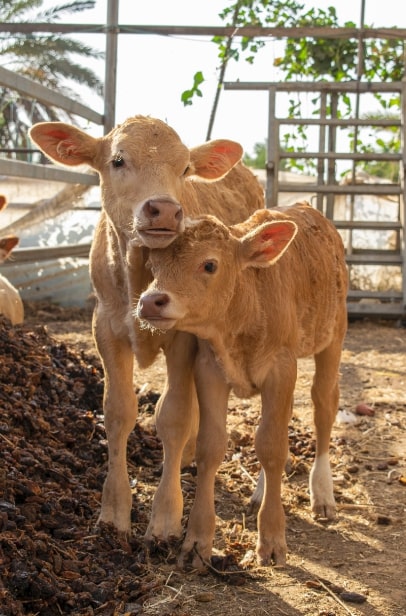
New research from a team at the University of Bristol Veterinary School gives a valuable insight into the behaviour of dairy calves. Crucially, it looks at how they behave differently in response to different animal feed strategies. This in turn can have a big impact on welfare. Let’s have a closer look at the details, as well as what it means for farmers.
The study
The research, published in the reputable Scientific Reports journal, is really interesting. Researchers had two groups of ten dairy calves. One group was given 12 litres of milk for three weeks (aka an enhanced allowance). The second group had half that allowance over the same period of time (this is the standard amount given to calves on dairy farms). The animals were then tested to see if they could find milk in a foraging test.
Notably, the calves receiving just 6 litres of milk per day would complete tasks faster and had better recall. They would work harder to earn the food reward. On the other hand, the second group had a lower level of engagement with the testing. They were less motivated by the reward and more inclined to play instead.
The key takeaway here is hungry dairy calves will sacrifice play and express fewer natural behaviours. Their focus is on finding food, suppressing their other responses. However, calves that don’t experience hunger will be the opposite. This shines a light on the importance of providing sufficient animal feed.
How does it impact welfare?
Animal welfare is a really important topic at the moment. There are plenty of studies that show happy animals are more productive and have a better quality of life. This is vital for food security as well as the economy.
In terms of dairy calves, it is really beneficial to ensure they have as much opportunity as possible to express natural behaviours. This includes play, exploring, and grooming. It can have a huge impact on their health and wellbeing, reducing stress, enhancing cognitive skills, and also helping them to develop healthier bodies.
This knowledge can also open the door for better welfare management and disease control. If dairy calves are receiving a sufficient amount of milk and prioritise play, it is easier to detect animals that may have health problems. Any not expressing natural behaviours like playing could be suffering from some form of illness or physical problem. You can therefore target them to find out the cause and provide effective treatment.
Talk to us about animal feed and welfare
JS Hubbuck Ltd shares the opinion that animal health and welfare should be the priority. It provides fantastic benefits, including happier, more productive animals. Additionally, it reduces the risk of disease outbreaks and food supply issues.
If you need to order different types of animal feed, you can rely on us. We have products from leading brands. More importantly, we ensure we know the key details about each of them, including nutritional value. As a result, we can help clients order exactly what they need. So, get in touch today and work with us.